Choosing the right battery technology is more crucial than ever in a world powered by portable electronics and cordless devices. For years, Nickel-Cadmium (NiCad) batteries were a staple, known for their rugged reliability. However, Lithium-Ion (Li-ion) technology has since emerged as a dominant force, promising superior performance and longevity. But how do these two compare when it comes to the ultimate measure of a battery’s value: its lifespan? Understanding the nuances of each can empower you to make an informed decision, whether you’re powering professional tools or everyday gadgets.
Understanding Battery Fundamentals
Before diving into a direct comparison, it’s helpful to grasp a few fundamental concepts that dictate a battery’s performance and lifespan. Key metrics include energy density, which measures how much energy a battery can store relative to its size and weight; cycle life, indicating the number of charge-discharge cycles a battery can endure before its capacity significantly degrades; and self-discharge, which refers to the rate at which a battery loses its charge when not in use. Additionally, phenomena like the “memory effect” and a battery’s temperature tolerance play critical roles in its overall efficiency and longevity.
Lithium-Ion (Li-ion) Batteries: The Modern Powerhouse
Lithium-Ion batteries have revolutionized energy storage, becoming the preferred choice for a vast array of modern devices from smartphones to electric vehicles. Their popularity stems from several compelling advantages that align with contemporary technological demands.
Advantages of Lithium-Ion Batteries
|
Our Picks for the Best Handheld vacuum cleaner in 2026
As an Amazon Associate I earn from qualifying purchases.
|
||
| Num | Product | Action |
|---|---|---|
| 1 | Bissell Pet Hair Eraser Cordless Hand Vacuum, Lithium Ion, Home, Auto, and Pet Vacuum, Easy-Empty Dirt Bin, Upholstery Tool, Brush Tool, and Crevice Tool Included, 2390A |

|
| 2 | BLACK+DECKER dustbuster Cordless Handheld Vacuum, Portable Car Vacuum Cordless Rechargeable, Wall Mount, Strong Suction QuickClean (HNVC215B10) |
|
| 3 | BLACK+DECKER dustbuster AdvancedClean Handheld Vacuum Cordless, Compact Home and Car Vacuum with Crevice Tool, Rotating Nozzle and Charging Station, Large Dust Bowl (CHV1410L) |
|
| 4 | CKIKH Handheld Vacuum Cordless, 15000PA Strong Suction Hand Held Car Vacuum Cleaner Portable with Multi-Nozzles & Washable Filter, Lightweight Rechargeable Vacuum Cleaner for Home, Car, Office, Pets |
|
| 5 | BLACK+DECKER dustbuster Cordless Handheld Vacuum, Portable Vacuum for Car and Home Rechargeable, Powerful Suction, Wide Mouth (HHVI315JO42) |
|
| 6 | Handheld Vacuum Cleaner, 28000Pa Brushless Motor Cordless Car Vacuum Cleaner, 3-Speed Mini Hoovers with Multiple Brush Heads Hand Held Vacuum Cordless for Office, Home, Kitchen, Car, Pet Hair |
|
| 7 | KMM Handheld Car Vacuum Cleaner, 9000Pa Vacuum Cleaner and Air Duster, 120W High Power Hand Held Vacuum with LED Light and Multi-Nozzles for Car, Home, Office, Pet |
|
| 8 | MONOZEL Car Vacuum Portable Cordless, 18000Pa 2 in 1 Vacuum Cleaner&Air Duster, 130W Brushless Motor Handheld Vacuum Cordless with 7800mAh Battery, LED Light, Multi-Nozzles for Car, Home, Office, Pet |
|
| 9 | Handheld Vacuum Cordless, Car Vacuums Powerful with Rechargeable Battery, Portable Hand Held Vacuum Cordless with Washable HEPA Filter, Mini Vacuums Kit for Men and Women |
|
| 10 | Gxzsk Handheld Vacuum Cordless, 15000PA Strong Suction Hand Held Car Vacuum Cleaner Rechargeable, Portable Hand Vacuum with Multi-Nozzles & Washable Filter for Home Office, Car, Pets |
|
One of the most significant benefits of Li-ion batteries is their high energy density, meaning they can store a substantial amount of power in a compact, lightweight package. This characteristic makes them ideal for portable devices where size and weight are critical factors [1.2, 1.3]. Unlike older battery chemistries, Li-ion batteries exhibit a very low self-discharge rate, allowing them to retain their charge for months when not in use [1.2].
Perhaps their most widely celebrated feature is the virtual absence of the memory effect. This means you can recharge Li-ion batteries at any point in their discharge cycle without worrying about reducing their overall capacity [1.2]. They also offer faster charging times compared to NiCad counterparts, providing quicker turnaround for busy users [1.1]. With advancements, quality Li-ion batteries boast a longer overall lifespan, often lasting 8-10 years and enduring hundreds to over a thousand charge cycles [2.1, 1.1].
Disadvantages of Lithium-Ion Batteries
Despite their many advantages, Li-ion batteries come with certain drawbacks. Their initial cost is generally higher than NiCad batteries, which can be a significant consideration for budget-conscious consumers or large-scale applications [1.2]. A critical aspect of Li-ion technology is the requirement for sophisticated protection circuitry, often known as a Battery Management System (BMS) [1.2]. This system is essential to prevent issues like overcharging, deep discharging, and overheating, which can compromise safety and lead to thermal runaway or fire [1.4].
Li-ion batteries are also somewhat sensitive to deep discharge and extreme temperatures. While they tolerate a wider range than some, prolonged exposure to very high or very low temperatures can accelerate degradation [1.2]. Although considered less toxic than NiCad, Li-ion batteries contain other heavy metals like nickel, cobalt, and manganese, necessitating responsible recycling practices to minimize environmental impact [1.4, 3.3].
Nickel-Cadmium (NiCad) Batteries: The Enduring Workhorse
Nickel-Cadmium batteries, an older but still relevant technology, have a long history of use in demanding applications, particularly in power tools and industrial equipment. They earned a reputation for their robustness and ability to deliver consistent power under challenging conditions.
Advantages of Nickel-Cadmium Batteries
One of the standout qualities of NiCad batteries is their robustness and resilience, making them forgiving if abused and reliable across a wide operating temperature range, performing effectively even in extreme cold or heat [2.4, 3.4, 4.1]. They are capable of handling high discharge rates, which makes them suitable for high-drain devices like cordless drills that require a surge of power [2.1].
Historically, NiCad batteries were valued for their good cycle life, typically ranging from 1,000 to 2,000 charge cycles, and in some active-use scenarios, lasting 15-20 years [1.1, 2.1]. From a financial perspective, NiCad batteries generally have a lower initial cost compared to Li-ion alternatives, making them an economical choice for certain applications [1.2].
Disadvantages of Nickel-Cadmium Batteries
The most widely known drawback of NiCad batteries is the memory effect. This phenomenon occurs if the battery is repeatedly recharged before being fully discharged, leading to a temporary reduction in its usable capacity [1.2]. To counteract this, occasional full discharge/recharge cycles are often recommended [4.1]. NiCad batteries also suffer from a relatively high self-discharge rate, meaning they lose charge more quickly when stored compared to Li-ion batteries [1.3].
Another significant disadvantage is their environmental impact. NiCad batteries contain toxic cadmium, a heavy metal that poses serious environmental and health risks if not disposed of properly [1.3, 3.3]. Consequently, many regions have implemented regulations limiting their use, and responsible recycling is paramount. Furthermore, NiCad batteries tend to be heavier and bulkier than Li-ion for the same energy output, and their charging times are typically slower, often requiring several hours for a full charge [1.3, 2.1].
Direct Comparison: Lithium-Ion vs. NiCad Battery Life and Beyond
When placing Lithium-Ion and NiCad batteries side-by-side, the differences extend far beyond just their chemical composition. These distinctions impact everything from their practical applications to their long-term value.
Lifespan & Cycle Life
Lithium-Ion batteries generally boast a longer overall lifespan and higher number of charge cycles than NiCad batteries [2.1, 4.1]. While NiCad typically offers 1,000-2,000 cycles, modern Li-ion can reach 500-1500, with some advanced types like LiFePO4 achieving up to 4,000 cycles [1.1, 2.1]. This translates to more years of reliable use for Li-ion in many applications.
Energy Density & Weight
Li-ion batteries are the clear winner here, offering significantly higher energy density. This allows them to pack more power into a much smaller and lighter form factor, making them superior for portable electronics and applications where weight is a concern [1.2, 1.3]. NiCad batteries are comparatively bulkier and heavier for the same energy capacity [1.3].
Memory Effect
The infamous memory effect is a problem primarily associated with NiCad batteries, requiring users to fully discharge them periodically to maintain capacity [1.2]. Lithium-Ion batteries, on the other hand, are virtually immune to this effect, providing greater flexibility in charging habits [1.2].
Self-Discharge
Li-ion batteries have an exceptionally low self-discharge rate, often retaining most of their charge even after months of storage [1.2]. NiCad batteries have a much higher self-discharge rate and may require recharging after relatively short periods of inactivity [1.3].
Charging Speed & Efficiency
Li-ion batteries typically charge much faster and more efficiently than NiCad batteries [1.1]. Their charging characteristics also allow for partial charges without detrimental effects, enhancing user convenience. NiCad charging cycles are generally longer and less flexible [2.1].
Cost
NiCad batteries are generally more affordable upfront than Li-ion batteries [1.2]. However, the higher initial cost of Li-ion is often offset by their longer lifespan and superior performance, potentially leading to a lower total cost of ownership over time [4.1].
Environmental Impact
This is a critical area where Li-ion significantly outperforms NiCad. NiCad batteries contain toxic cadmium, which is harmful to the environment and human health, necessitating stringent recycling programs [1.3]. While Li-ion batteries also contain valuable and sometimes harmful materials, they are generally less toxic and easier to recycle safely [1.4, 3.3].
Temperature Tolerance
NiCad batteries traditionally excel in withstanding a wider range of extreme temperatures without significant performance degradation, making them a robust choice for harsh environments [2.4]. Li-ion batteries, while generally tolerant, can be more sensitive to extreme heat or cold, which can impact their lifespan and safety [1.2].
Applications
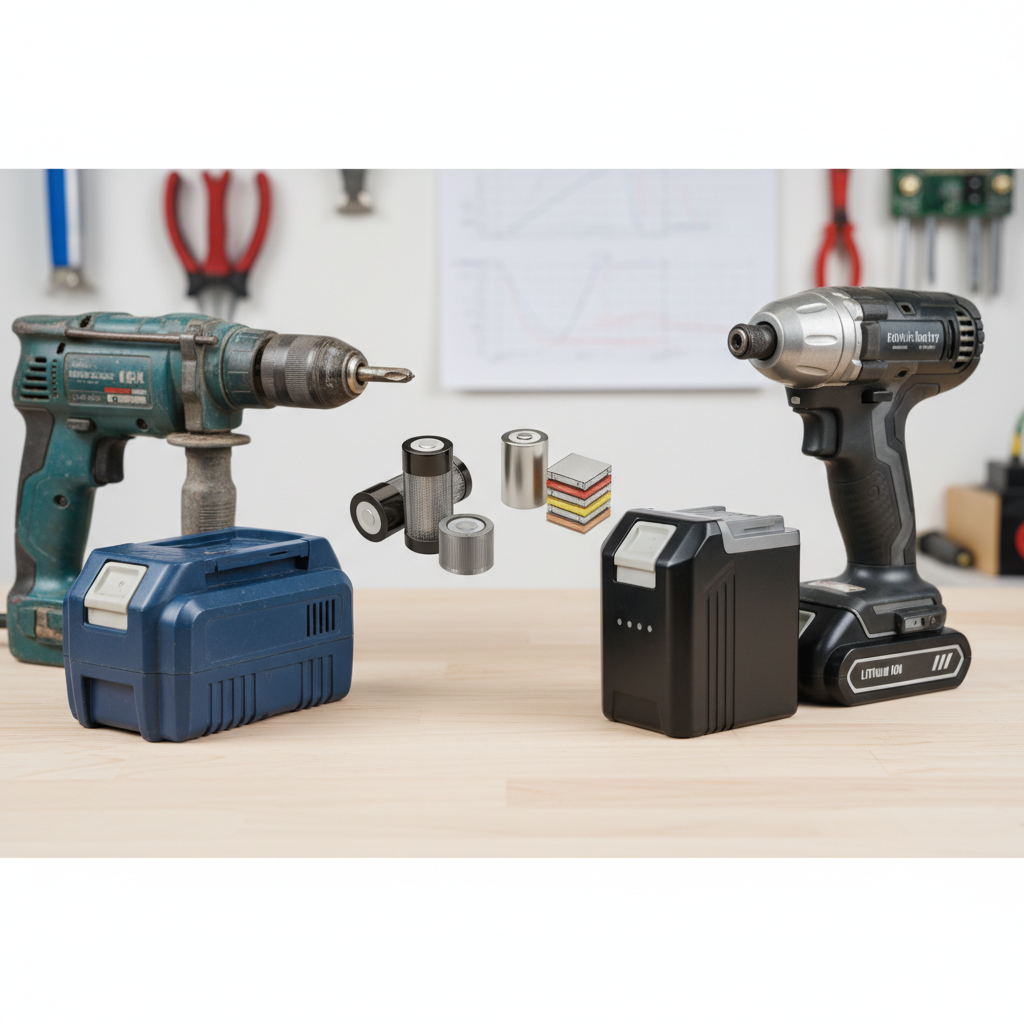
NiCad batteries are still found in older power tools and certain industrial applications where their ruggedness and high-drain capabilities are valued. Lithium-Ion batteries dominate modern portable electronics, electric vehicles, and renewable energy storage systems due to their superior energy density, light weight, and longer life.
Here’s a quick overview of the key differences:
| Feature | Lithium-Ion (Li-ion) | Nickel-Cadmium (NiCad) |
|---|---|---|
| Lifespan (Years) | 8-10 years (or more) [1.1, 2.2] | 5 years (up to 15-20 years in active use) [1.1] |
| Cycle Life | 500-1500 cycles (up to 4000 for LiFePO4) [2.1, 1.1] | 1000-2000 cycles [2.1] |
| Energy Density | High (more power, less weight) [1.2] | Moderate to Low (bulkier for same power) [1.2] |
| Memory Effect | Virtually none [1.2] | Prone to memory effect [1.2] |
| Self-Discharge | Very low [1.2] | High [1.3] |
| Charging Speed | Faster [1.1] | Slower [2.1] |
| Initial Cost | Higher [1.2] | Lower [1.2] |
| Environmental | Less toxic, recyclable [1.4] | Contains toxic cadmium, difficult recycling [1.3] |
| Weight/Size | Lighter, smaller [1.2] | Heavier, bulkier [1.3] |
| Safety | Requires BMS, potential thermal runaway [1.2] | Robust, but sensitive to overcharging [2.4] |
| Temperature | Good, but sensitive to extremes [1.2] | Excellent, wide operating range [2.4] |
Maximizing Your Battery’s Lifespan: Tips for Both Types
Regardless of the battery chemistry you choose, proper care and maintenance can significantly extend its useful life and ensure optimal performance.
General Battery Care Tips
Always store batteries in a cool, dry place, away from direct sunlight and extreme temperatures [1.5, 1.6]. Ensure you use the correct charger specifically designed for your battery type to prevent overcharging or undercharging, which can lead to degradation [1.5, 2.6]. Regular cleaning of terminals can also help maintain efficient connections.
Li-ion Specific Longevity Tips
To maximize the life of your Lithium-Ion batteries, avoid completely draining them or charging them to 100% for prolonged storage [1.5, 3.5]. Many experts recommend keeping the charge level between 20% and 80% for daily use to reduce chemical stress and slow capacity fading [4.5]. Avoid using “ultra-fast” chargers that promise full charge in under an hour, as rapid charging can accelerate aging [5.5]. Relying on a high-quality Battery Management System (BMS) is crucial for safe and efficient operation [1.5].
“For maximum lithium-ion battery life, avoid habitually charging to 100% and discharging to 0%. Aim for partial charges and keep them in a moderate temperature range.” – John Smith, Battery Technology Expert
NiCad Specific Longevity Tips
NiCad batteries benefit from a different approach due to the memory effect. To maintain their capacity, it’s advisable to perform a full discharge followed by a full recharge every 1-3 months [4.1]. This cyclic operation helps “reset” the battery and prevents capacity reduction. When storing NiCad batteries for extended periods, it’s generally recommended to fully charge them or maintain a trickle charge, or store them at 40-50% [1.6, 4.6]. Ensuring proper ventilation during charging and storage is also important for NiCad batteries [2.6].
The Future of Battery Technology
The landscape of battery technology is continuously evolving. While NiCad batteries have largely been phased out in consumer electronics due to environmental concerns and the rise of superior alternatives, Lithium-Ion technology continues to advance. Newer variants, such as Lithium Iron Phosphate (LiFePO4) batteries, offer enhanced safety, even longer cycle life, and greater thermal stability compared to earlier Li-ion chemistries [1.4]. These innovations promise even more efficient, reliable, and sustainable power solutions for the future.
Conclusion
The comparison between Lithium-Ion and NiCad battery life clearly shows a shift towards Li-ion as the preferred technology in most modern applications. With its higher energy density, lower self-discharge, and absence of the memory effect, Lithium-Ion batteries offer significant advantages in terms of performance and overall lifespan. However, NiCad batteries still hold a niche for their ruggedness and tolerance to extreme temperatures in specific industrial contexts. Ultimately, the “best” battery for you depends on your specific needs, budget, and application requirements. By understanding the distinct characteristics and following proper care guidelines, you can maximize the life and performance of your chosen battery technology. What innovations in battery life are you most excited to see next?
Frequently Asked Questions
Do NiCad batteries still have a place in modern technology?
While largely replaced by Lithium-Ion in consumer electronics, NiCad batteries still find use in specific industrial applications and power tools where their robustness, high-drain capability, and tolerance to extreme temperatures are prioritized. Their lower initial cost can also be a factor in some sectors.
Is the “memory effect” in NiCad batteries a significant problem?
The memory effect can reduce the usable capacity of NiCad batteries if they are repeatedly recharged after only partial discharge. While some studies suggest it’s less severe in typical consumer use than often believed, performing a full discharge-recharge cycle periodically (e.g., monthly) is recommended to mitigate its impact and maintain optimal battery performance.
How does temperature affect Lithium-Ion battery life?
Lithium-Ion batteries are sensitive to extreme temperatures. High temperatures can accelerate chemical degradation, leading to permanent capacity loss and potential safety risks, while extremely cold temperatures can temporarily reduce performance and also cause long-term damage. Storing and operating them within recommended temperature ranges (typically room temperature) is crucial for longevity.
Are Lithium-Ion batteries truly more environmentally friendly than NiCad?
Yes, generally. Lithium-Ion batteries do not contain toxic cadmium, which is a major environmental pollutant in NiCad batteries. However, Li-ion batteries do contain other heavy metals like cobalt and nickel, necessitating proper recycling to recover these materials and prevent environmental contamination. The absence of cadmium makes Li-ion a significantly better environmental choice.