In our fast-paced lives, the modern handheld vacuum cleaner has become an indispensable tool for quick cleanups. Whether it’s crumbs in the car, pet hair on the sofa, or dust bunnies in tight corners, these compact devices offer unparalleled convenience. But beneath their sleek designs lies a fundamental difference in how they capture dirt: cyclonic suction versus the traditional standard bag. Understanding these core technologies is key to choosing the best handheld vacuum for your specific needs, ensuring efficiency and satisfaction with every use.
The Power of Portability: Understanding Handheld Vacuum Cleaners
Handheld vacuum cleaners are designed for agility and immediate action, making them perfect for tackling unexpected messes without the hassle of pulling out a full-sized machine. From kitchen spills and car interiors to upholstery and tricky crevices, their lightweight and cordless nature offers unmatched flexibility. However, their smaller size also means that the choice of dust collection system—cyclonic suction or a standard bag—significantly impacts performance, maintenance, and overall user experience.
How They Work: Cyclonic Suction vs. Standard Bag Mechanisms
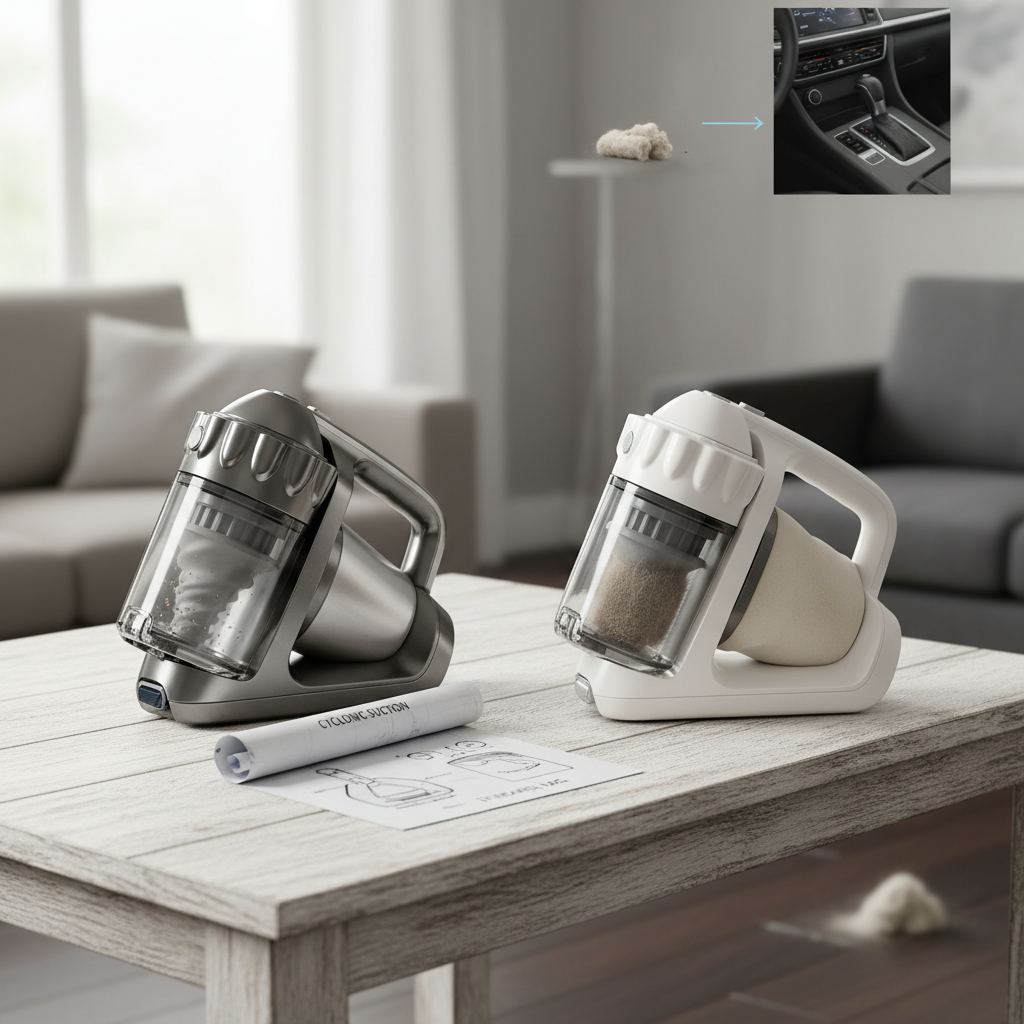
The core distinction between these two types lies in their method of separating dirt from the airflow. Both aim to trap debris while expelling clean air, but they achieve this through vastly different engineering principles.
Cyclonic Suction Technology
|
Our Picks for the Best Handheld vacuum cleaner in 2026
As an Amazon Associate I earn from qualifying purchases.
|
||
| Num | Product | Action |
|---|---|---|
| 1 | Handheld Vacuum Cleaner, 28000Pa Brushless Motor Cordless Car Vacuum Cleaner, 3-Speed Mini Hoovers with Multiple Brush Heads Hand Held Vacuum Cordless for Office, Home, Kitchen, Car, Pet Hair |

|
| 2 | MONOZEL Car Vacuum Portable Cordless, 18000Pa 2 in 1 Vacuum Cleaner&Air Duster, 130W Brushless Motor Handheld Vacuum Cordless with 7800mAh Battery, LED Light, Multi-Nozzles for Car, Home, Office, Pet |
|
| 3 | KMM Handheld Car Vacuum Cleaner, 9000Pa Vacuum Cleaner and Air Duster, 120W High Power Hand Held Vacuum with LED Light and Multi-Nozzles for Car, Home, Office, Pet |
|
| 4 | Bissell Pet Hair Eraser Cordless Hand Vacuum, Lithium Ion, Home, Auto, and Pet Vacuum, Easy-Empty Dirt Bin, Upholstery Tool, Brush Tool, and Crevice Tool Included, 2390A |
|
| 5 | BLACK+DECKER dustbuster Cordless Handheld Vacuum, Portable Car Vacuum Cordless Rechargeable, Wall Mount, Strong Suction QuickClean (HNVC215B10) |
|
| 6 | Handheld Vacuum Cordless, Car Vacuums Powerful with Rechargeable Battery, Portable Hand Held Vacuum Cordless with Washable HEPA Filter, Mini Vacuums Kit for Men and Women |
|
| 7 | BLACK+DECKER dustbuster Cordless Handheld Vacuum, Portable Vacuum for Car and Home Rechargeable, Powerful Suction, Wide Mouth (HHVI315JO42) |
|
| 8 | CKIKH Handheld Vacuum Cordless, 15000PA Strong Suction Hand Held Car Vacuum Cleaner Portable with Multi-Nozzles & Washable Filter, Lightweight Rechargeable Vacuum Cleaner for Home, Car, Office, Pets |
|
| 9 | Gxzsk Handheld Vacuum Cordless, 15000PA Strong Suction Hand Held Car Vacuum Cleaner Rechargeable, Portable Hand Vacuum with Multi-Nozzles & Washable Filter for Home Office, Car, Pets |
|
| 10 | BLACK+DECKER dustbuster AdvancedClean Handheld Vacuum Cordless, Compact Home and Car Vacuum with Crevice Tool, Rotating Nozzle and Charging Station, Large Dust Bowl (CHV1410L) |
|
Cyclonic vacuum cleaners harness the power of centrifugal force to separate dust and debris from the air. As air and dirt are drawn into the vacuum, a powerful motor creates a high-speed vortex inside a cylindrical chamber, often transparent. This “miniature tornado” flings the heavier dirt particles outward against the walls of the bin, where gravity pulls them down into a collection reservoir. The cleaner air then passes through fine filters before being expelled.
Modern cyclonic systems often feature multiple smaller cyclones working in parallel (multi-cyclonic technology). This enhances the separation process, trapping even finer dust particles and helping to maintain consistent airflow. This innovative design was notably popularized to overcome the suction loss often associated with traditional bagged vacuums.
Standard Bag Filtration
Traditional standard bag vacuum cleaners operate on a simpler principle. Air and debris are sucked directly into a disposable bag made of porous material. The bag acts as both a collection vessel and a filter. Dirt and dust are trapped inside the bag, while the air is allowed to pass through the bag’s pores and then typically through additional motor filters before being exhausted.
In this system, the bag is an integral part of the filtration process. When the bag fills up, the pores become clogged with dirt, restricting airflow and causing a noticeable decrease in suction power. This design requires regular bag replacement to ensure optimal performance.
Advantages and Applications of Each Technology
Each suction type brings distinct advantages tailored to different cleaning preferences and priorities.
Benefits of Cyclonic Suction Handheld Vacuums
Cyclonic handheld vacuums have gained immense popularity due largely to several compelling benefits:
- Consistent Suction Power: One of the most significant advantages is their ability to maintain strong, consistent suction throughout the cleaning cycle, regardless of how full the dustbin becomes. This is because debris is separated from the airflow path before it reaches the main filters.
- Bagless Design: Eliminating the need for disposable bags translates to ongoing cost savings and a more environmentally friendly cleaning routine. You won’t have to worry about running out of bags or searching for specific replacement sizes.
- Visibility of Dirt Collection: The transparent dustbins common in cyclonic models allow you to see exactly how much dirt has been collected, providing a satisfying visual of your cleaning efforts. It also makes it easy to spot and retrieve any accidentally vacuumed small items like jewelry or screws.
- Effective Filtration (especially Multi-Cyclonic): Many cyclonic models, particularly those with multi-cyclonic technology, are highly effective at trapping fine dust and allergens, often incorporating HEPA filters to ensure cleaner air is expelled, which is beneficial for allergy sufferers.
Benefits of Standard Bag Handheld Vacuums
While cyclonic technology dominates the market, standard bagged handheld vacuums still offer unique benefits that appeal to many users:
- Hygienic Dust Disposal: For allergy sufferers or those sensitive to dust, bagged vacuums offer a distinct advantage. All collected dirt, dust, and allergens are sealed within the bag, minimizing exposure during disposal. You simply remove the full bag and discard it without direct contact with the contents.
- Larger Capacity (generally): Bagged systems often boast a larger overall capacity compared to their bagless counterparts, meaning less frequent emptying is required, especially during larger cleaning tasks.
- Reduced Filter Maintenance: In many bagged models, the bag itself serves as the primary filter, capturing the bulk of the debris. This can reduce the frequency of cleaning or replacing separate motor filters, simplifying overall maintenance.
- Less Exposure to Fine Dust During Emptying: Because the dirt is contained within the sealed bag, there is minimal re-release of fine dust into the air when emptying the vacuum, contributing to better indoor air quality during the disposal process.
“For those prioritizing hygiene and minimizing dust exposure, especially individuals with allergies, the sealed disposal of a bagged vacuum offers an undeniable advantage.” – Dr. Eleanor Vance, Environmental Health Specialist
Disadvantages and Considerations
Every technology has its trade-offs. Being aware of these can help you weigh the pros and cons against your cleaning habits.
Drawbacks of Cyclonic Suction Handheld Vacuums
Despite their advanced features, cyclonic handheld vacuums come with a few considerations:
- Dust Exposure During Emptying: The very act of emptying a bagless dirt bin can release a cloud of fine dust back into the air. This can be problematic for individuals with allergies or asthma, often requiring emptying outdoors or wearing a mask.
- Regular Filter Cleaning: While cyclonic action keeps filters cleaner for longer by separating larger debris, fine dust still accumulates. These filters require regular washing or cleaning to maintain optimal performance, and failing to do so can lead to reduced suction.
- Noise Levels: The high-speed airflow and internal vortex generation in some cyclonic models can result in higher noise levels during operation compared to quieter bagged alternatives.
- Frequent Emptying of Small Bins: Handheld vacuums, by nature, have smaller dirt capacities. Even with consistent suction, a cyclonic handheld may still require frequent emptying if used for significant messes, which can be less hygienic than a larger bagged model.
Drawbacks of Standard Bag Handheld Vacuums
Standard bagged handheld vacuums also have their downsides:
- Loss of Suction as Bag Fills: This is the most frequently cited drawback. As the vacuum bag fills with dirt and dust, the airflow through the bag becomes restricted, leading to a noticeable drop in suction power.
- Ongoing Cost and Availability of Replacement Bags: Bags are a recurring expense. Depending on usage, these costs can add up over time. Furthermore, finding the correct replacement bags for older or less common models can sometimes be challenging.
- Less Environmentally Friendly: Disposable bags contribute to landfill waste, making them a less eco-conscious choice for some consumers.
- Lack of Visibility: Since the dirt is hidden inside the bag, you cannot easily gauge how full it is or if you’ve accidentally vacuumed up a small item you intended to keep.
- Potential for Bag Leaks: While quality bags are designed to be durable, there’s always a slight risk of a bag tearing or leaking, leading to a messy cleanup.
Choosing Your Ideal Handheld Vacuum: Factors to Consider
Selecting the perfect handheld vacuum involves a personalized assessment of your needs and preferences.
- Cleaning Needs: For quick daily spills and dry debris, either type can work. If you frequently tackle pet hair or larger volumes of dirt, a cyclonic model’s sustained suction or a bagged model’s larger capacity might be preferable.
- Allergy Concerns: If you or someone in your household suffers from allergies or asthma, a bagged handheld vacuum offers superior dust containment during disposal, significantly reducing allergen exposure.
- Maintenance Preferences: Are you willing to regularly empty and wash a bagless filter, or do you prefer the grab-and-toss simplicity of a disposable bag, even with recurring costs?
- Budget & Long-Term Costs: Consider not just the upfront price but also the ongoing expense of replacement bags versus the potential need for filter replacements in bagless units.
- Capacity & Runtime: Handhelds inherently have smaller capacities and limited battery life (if cordless). Evaluate how much cleaning you typically do per session to match it with the vacuum’s specifications.
Top Handheld Vacuum Cleaner Recommendations
While bagged handheld vacuums are less common than their cyclonic counterparts, both categories offer excellent options depending on your priorities.
For superior sustained suction and visible dirt collection, popular cyclonic models like the Shark UltraCyclone Pro or various Dyson handhelds often stand out, praised for their powerful performance on diverse surfaces. These are frequently chosen for their bagless convenience and effectiveness against everyday crumbs and pet hair. On the other hand, if hygienic disposal and minimal dust exposure are your top concerns, looking into specific models that still offer a contained bagged system, like some Gtech handhelds, might be a better fit, offering peace of mind for allergy sufferers.
Tips for Maximizing Your Handheld Vacuum’s Performance
Regardless of the technology you choose, proper usage and maintenance will extend your handheld vacuum’s life and efficiency:
- Empty Regularly: For cyclonic vacuums, empty the dustbin after each significant use to prevent potential airflow restrictions and dust re-release. For bagged models, change the bag before it’s completely full to maintain optimal suction.
- Clean Filters: Regularly clean or wash your cyclonic vacuum’s filters according to the manufacturer’s instructions. If you have a bagged vacuum with additional filters, ensure they are maintained as well.
- Charge Consistently: For cordless handhelds, always fully charge the battery after use to ensure it’s ready for the next quick cleanup and to prolong battery life.
- Utilize Attachments: Make the most of crevice tools for tight spots and brush attachments for upholstery and stubborn debris.
Conclusion
Choosing between a cyclonic suction and a standard bag handheld vacuum cleaner boils down to balancing sustained power with hygienic disposal and maintenance preferences. Cyclonic models offer consistent suction and bagless convenience, ideal for everyday messes and those who appreciate visual feedback. Bagged models, while requiring bag purchases, excel in allergen containment and less frequent emptying, making them a preferred choice for allergy sufferers. By carefully considering your cleaning habits and priorities, you can confidently select a handheld vacuum that makes maintaining a spotless environment effortlessly efficient.
What features are most important to you in a handheld vacuum cleaner?
Frequently Asked Questions
Are cyclonic vacuums truly more powerful than bagged ones?
Cyclonic vacuums are designed to maintain consistent suction power as the bin fills, which can make them feel more powerful over time compared to bagged vacuums that may lose suction as the bag becomes full. The initial power can vary between models regardless of technology.
Which handheld vacuum type is better for allergies?
Bagged handheld vacuums are generally better for allergy sufferers because the dust and allergens are sealed within the disposable bag, minimizing exposure during emptying. Cyclonic models, while often having good filtration, can release dust during the emptying process.
How often should I empty or change filters/bags?
For cyclonic handhelds, it’s recommended to empty the dustbin after each significant use and clean the filters monthly or as needed. For bagged handhelds, change the bag when it’s about two-thirds full or when you notice a drop in suction, typically every few weeks to months depending on usage.
Can I use a cyclonic handheld for pet hair?
Yes, many cyclonic handheld vacuums are excellent for pet hair due to their strong, consistent suction. Look for models specifically designed for pet owners, often featuring motorized brush attachments that are effective at lifting embedded pet hair.