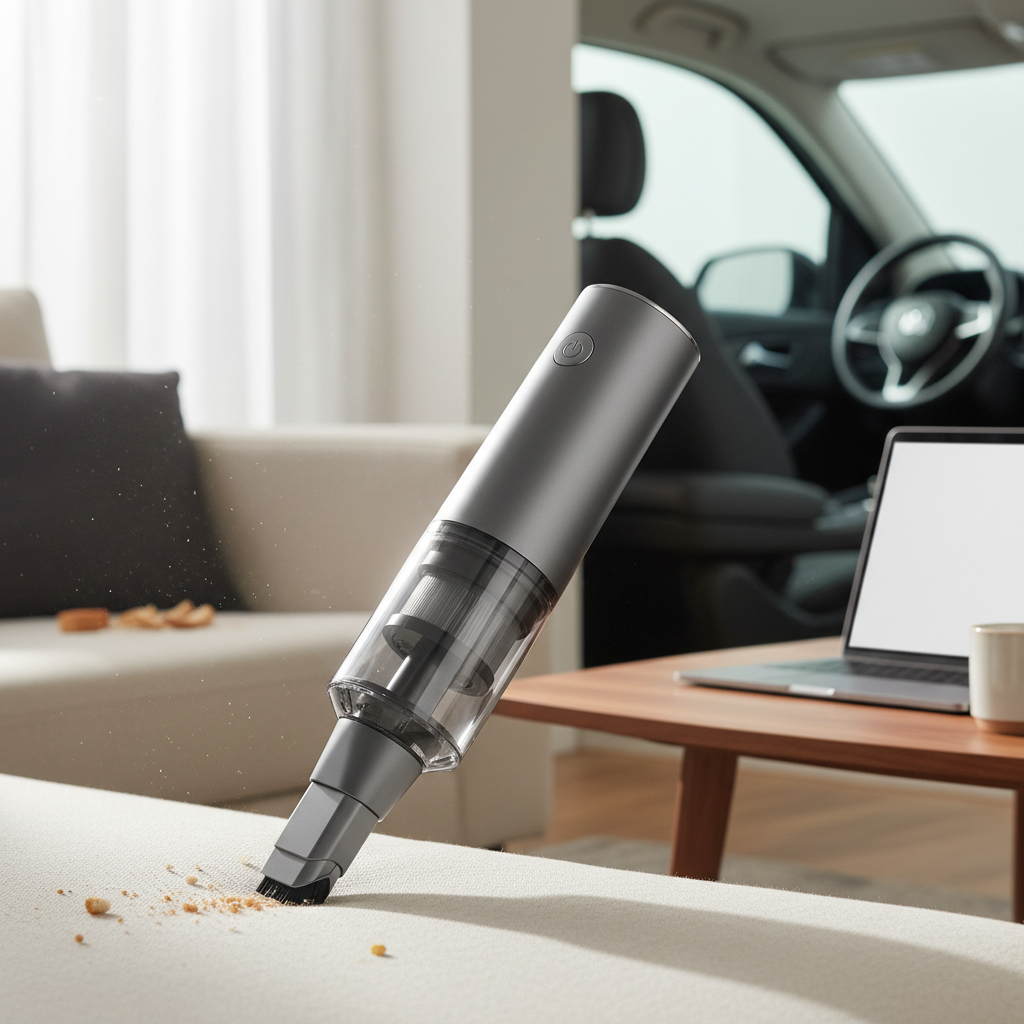
Cleaning has always been a fundamental part of maintaining a healthy and comfortable living space, but our tools are constantly evolving. As smart homes become the norm and artificial intelligence (AI) transforms everyday devices, it’s natural to wonder how these advancements will impact even the most ubiquitous cleaning gadgets. Handheld vacuum cleaners, prized for their portability and quick cleanup capabilities, are at the forefront of this technological shift. Will AI turn these compact cleaning companions into truly intelligent assistants, or is advanced intelligence solely for their robotic counterparts? The future suggests a fascinating blend of manual control and smart assistance.
The Evolution of Handheld Vacuum Cleaners
Handheld vacuum cleaners have come a long way from simple dustbusters, evolving into powerful, cordless tools indispensable for quick clean-ups in cars, on furniture, and in tight spaces. Early innovations focused primarily on improving suction power, enhancing filtration systems to capture more dust and allergens, and increasing battery life for greater convenience. The shift to cordless designs brought unparalleled freedom, making these devices easier to maneuver and use for various tasks.
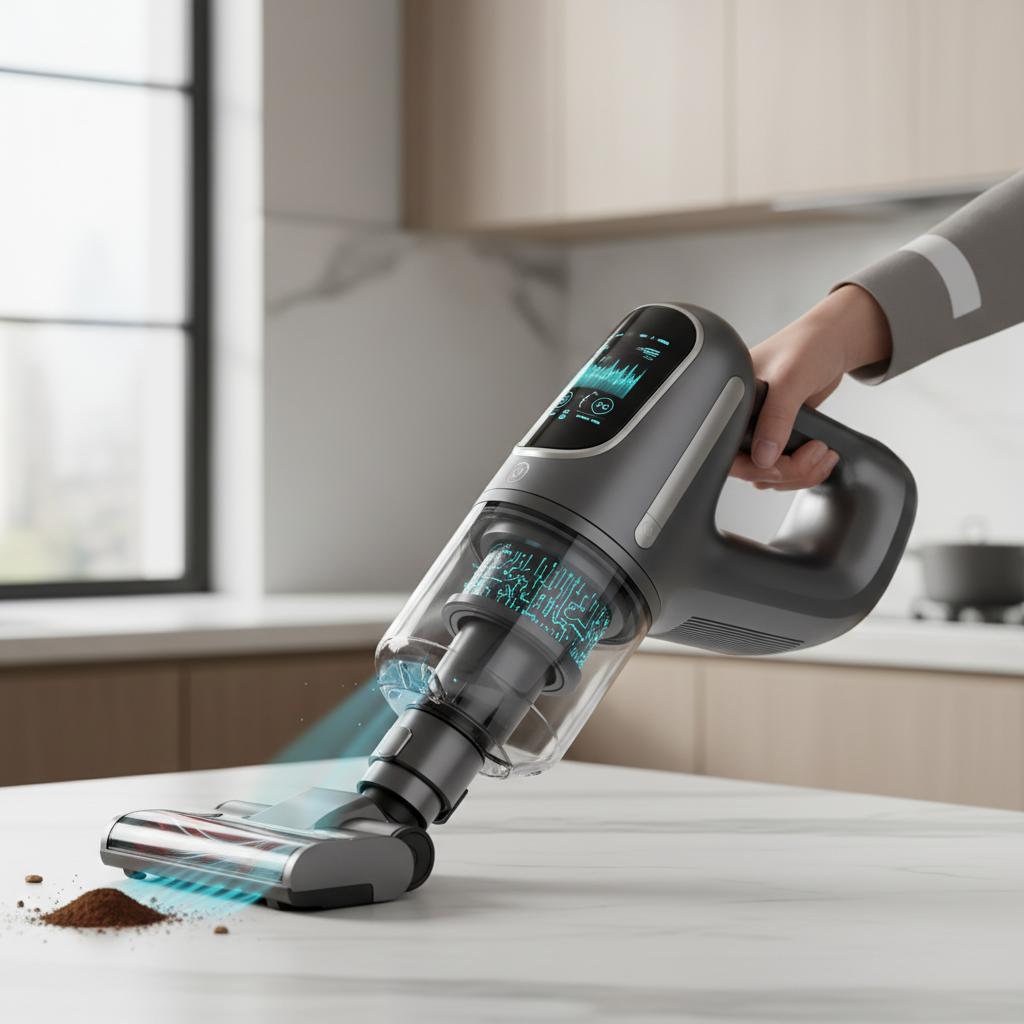
Today’s premium cordless vacuums already hint at an intelligent future. Many models feature auto-adjusting suction that can detect the floor type or the amount of debris, boosting power on carpets or heavy messes and easing off on hard floors to conserve energy. Digital displays provide real-time feedback on battery life and power modes, taking the guesswork out of cleaning sessions. These “smart” features, though not full AI, lay the groundwork for more sophisticated integration. Some contemporary handhelds even incorporate smart cleaning features that can detect hidden dirt, edges, and cleaning direction, adjusting power for increased efficiency.
AI Beyond Robotics: What It Means for Handheld Devices
While much of the current discussion around AI in cleaning revolves around autonomous robot vacuums that map homes, avoid obstacles, and empty themselves, the application of AI in handheld vacuums presents a different, yet equally exciting, prospect. For handheld devices, AI isn’t about full autonomy but rather about enhancing the user’s manual effort, making cleaning more intuitive, efficient, and personalized. It transforms the handheld vacuum from a mere motor and nozzle into a responsive cleaning partner.
The integration of AI can bring a new dimension to how we interact with these tools, providing a level of assistance that goes beyond simple automation. Instead of blindly applying maximum power, an AI-powered handheld could understand the cleaning scenario, offering targeted solutions that save time, energy, and extend the device’s lifespan. This intelligence assists the user rather than replacing them, optimizing every sweep and suction for superior results.
Key AI-Powered Innovations in Handheld Vacuums
The future of handheld vacuum cleaners will see AI woven into their core functionality, offering a suite of intelligent features designed to optimize your cleaning routine.
Adaptive Cleaning Intelligence
|
Our Picks for the Best Handheld vacuum cleaner in 2026
As an Amazon Associate I earn from qualifying purchases.
|
||
| Num | Product | Action |
|---|---|---|
| 1 | BLACK+DECKER dustbuster AdvancedClean Handheld Vacuum Cordless, Compact Home and Car Vacuum with Crevice Tool, Rotating Nozzle and Charging Station, Large Dust Bowl (CHV1410L) |

|
| 2 | CKIKH Handheld Vacuum Cordless, 15000PA Strong Suction Hand Held Car Vacuum Cleaner Portable with Multi-Nozzles & Washable Filter, Lightweight Rechargeable Vacuum Cleaner for Home, Car, Office, Pets |
|
| 3 | BLACK+DECKER dustbuster Cordless Handheld Vacuum, Portable Car Vacuum Cordless Rechargeable, Wall Mount, Strong Suction QuickClean (HNVC215B10) |
|
| 4 | BLACK+DECKER dustbuster Cordless Handheld Vacuum, Portable Vacuum for Car and Home Rechargeable, Powerful Suction, Wide Mouth (HHVI315JO42) |
|
| 5 | KMM Handheld Car Vacuum Cleaner, 9000Pa Vacuum Cleaner and Air Duster, 120W High Power Hand Held Vacuum with LED Light and Multi-Nozzles for Car, Home, Office, Pet |
|
| 6 | MONOZEL Car Vacuum Portable Cordless, 18000Pa 2 in 1 Vacuum Cleaner&Air Duster, 130W Brushless Motor Handheld Vacuum Cordless with 7800mAh Battery, LED Light, Multi-Nozzles for Car, Home, Office, Pet |
|
| 7 | Bissell Pet Hair Eraser Cordless Hand Vacuum, Lithium Ion, Home, Auto, and Pet Vacuum, Easy-Empty Dirt Bin, Upholstery Tool, Brush Tool, and Crevice Tool Included, 2390A |
|
| 8 | Handheld Vacuum Cordless, Car Vacuums Powerful with Rechargeable Battery, Portable Hand Held Vacuum Cordless with Washable HEPA Filter, Mini Vacuums Kit for Men and Women |
|
| 9 | Gxzsk Handheld Vacuum Cordless, 15000PA Strong Suction Hand Held Car Vacuum Cleaner Rechargeable, Portable Hand Vacuum with Multi-Nozzles & Washable Filter for Home Office, Car, Pets |
|
| 10 | Handheld Vacuum Cleaner, 28000Pa Brushless Motor Cordless Car Vacuum Cleaner, 3-Speed Mini Hoovers with Multiple Brush Heads Hand Held Vacuum Cordless for Office, Home, Kitchen, Car, Pet Hair |
|
Imagine a handheld vacuum that “sees” the mess and responds accordingly. AI will enable devices to utilize advanced sensors to detect the type and concentration of dirt, as well as the surface material—whether it’s hardwood, carpet, or upholstery. This adaptive intelligence will automatically adjust suction power, brush speed, and even airflow to deliver the most effective clean without user intervention. For instance, a vacuum could boost power for deeply embedded pet hair on a rug and then seamlessly reduce it for light crumbs on a kitchen counter, maximizing battery efficiency and cleaning performance.
Personalized Cleaning Routines and Predictive Maintenance
The handheld vacuum of tomorrow might learn your cleaning habits over time. Through machine learning algorithms, it could identify frequently cleaned areas, preferred power settings, and even common debris types. This data could then be used to suggest optimal cleaning schedules, offer personalized tips via a connected mobile app, or even pre-select modes based on anticipated tasks. Furthermore, AI will enable predictive maintenance. By monitoring motor performance, filter status, and battery health, the vacuum could alert you to potential issues before they become problems, advising when to clean or replace a filter or when a service is due. This proactive approach ensures your device remains in peak condition, extending its lifespan and maintaining optimal performance.
Enhanced User Interface and Connectivity
While handheld vacuums are manually operated, AI can greatly enhance their usability through improved interfaces and smart home integration. Voice control, a staple in smart homes, could allow users to issue commands like “boost power for pet hair” or “switch to silent mode” while cleaning. Mobile apps will evolve to provide more than just remote control; they could offer detailed cleaning reports, identify common “problem areas” in your home based on usage, and integrate with other smart devices. For example, your handheld vacuum could communicate with an air purifier, prompting it to increase filtration after a heavy vacuuming session. The seamless integration into a broader smart home ecosystem will create a more connected and efficient cleaning experience.
Multifunctionality Driven by AI
Future handheld vacuums, guided by AI, will transcend simple dry vacuuming. The integration of a water spray function could transform them into versatile spot cleaners, intelligently dispensing the right amount of solution for spills. AI-driven mite removal functions could precisely target and deep-clean bedding and upholstery, offering enhanced hygiene. Real-time feedback, perhaps through on-device displays or app notifications, could indicate the cleanliness level of a surface, ensuring no spot is missed and providing confidence in a thorough clean.
“The true power of AI in handheld cleaning lies not in making the device autonomous, but in making the user’s effort smarter and more effective, transforming a chore into a guided, optimized process.”
The Benefits of AI in Handheld Vacuums
The incorporation of AI into handheld vacuum cleaners promises a range of tangible benefits for the modern household.
- Increased Efficiency and Effectiveness: AI ensures that the vacuum always operates at its optimal settings for the specific task at hand, leading to cleaner results in less time and with less effort. This means less going over the same spot multiple times and more thorough cleaning on diverse surfaces.
- Reduced User Effort: By automating power adjustments and offering intelligent guidance, AI minimizes the need for users to constantly adjust settings or guess the best approach for different messes. This makes the cleaning experience smoother and less fatiguing.
- Healthier Homes: Advanced AI can power more sophisticated filtration monitoring and even detect specific allergens or pollutants, ensuring filters are clean and air quality is maintained. Features like mite removal enhance deep cleaning for a healthier environment.
- Longer Device Lifespan: Predictive maintenance alerts and optimized usage patterns can prevent premature wear and tear, ensuring your handheld vacuum lasts longer and performs consistently.
- Enhanced Convenience: Seamless smart home integration and personalized cleaning suggestions streamline your routine, making cleaning a more integrated and less intrusive part of daily life.
Challenges and Future Outlook
While the promise of AI in handheld vacuums is exciting, there are challenges to consider. The increased sophistication of these devices will likely lead to higher initial costs. Additionally, the continuous processing required for AI features could place greater demands on battery life, necessitating advancements in power efficiency and battery technology. Data privacy will also become a more prominent concern as devices learn about our homes and habits.
However, the trajectory of technological innovation suggests these hurdles will be overcome. As AI components become more compact and energy-efficient, and as manufacturing scales, intelligent handheld vacuums will become increasingly accessible. The future of cleaning is undoubtedly smarter, and handheld vacuum cleaners are poised to play a crucial, intelligent role in this evolution, offering a seamless blend of power, portability, and artificial intelligence to redefine our cleaning experience.
Frequently Asked Questions
How will AI-powered handheld vacuums differ from current “smart” models?
AI-powered handheld vacuums will go beyond basic sensors and pre-set modes by using machine learning to adapt to specific cleaning scenarios, learn user habits, and offer predictive maintenance, providing a more personalized and optimized cleaning experience than current smart features.
Can AI in handheld vacuums help with specific cleaning tasks like pet hair or allergens?
Absolutely. AI can enable handheld vacuums to specifically detect pet hair or allergen concentrations, automatically boosting suction and optimizing brush actions for effective removal, while advanced filtration systems ensure these particles are trapped.
Will AI make handheld vacuums fully autonomous like robot vacuums?
No, the role of AI in handheld vacuums is to assist the user, not to replace them entirely. It enhances manual control by providing adaptive power, intelligent guidance, and personalized insights, making the cleaning process more efficient and effective, but still requiring user operation.
What are the key benefits of AI for battery life in handheld vacuums?
AI can optimize battery life by intelligently adjusting suction power based on the cleaning load and surface, ensuring the vacuum only uses the energy it needs. This adaptive approach helps extend runtime and provides real-time battery insights, making power management more efficient.